Get Bitcoin Wallet
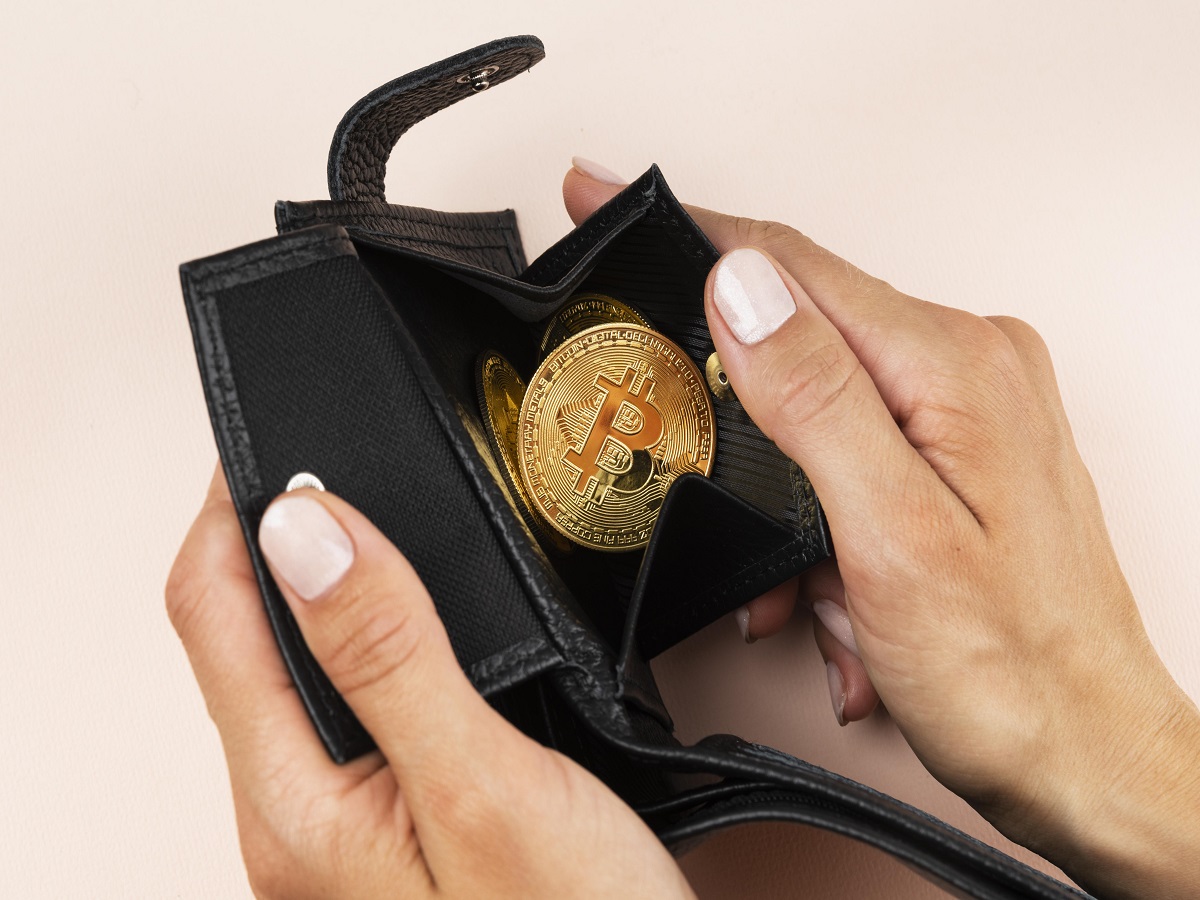
Bitcoin wallets are secure digital tools that store private keys, enabling users to send, receive, and manage Bitcoin, acting as a "digital bank account". Options include hardware (cold) wallets for maximum security (e.g., Ledger, Trezor), and software (hot) wallets for convenience on mobile or desktop.
Key Types of Bitcoin Wallets
1. Hardware Wallets
A hardware wallet is a physical, offline device (often called cold storage) that securely stores cryptocurrency private keys, keeping them immune to internet-based hacking, malware, and phishing threats. They offer maximum security for long-term holding, acting as a non-custodial "digital safe" to manage assets directly, rather than relying on exchanges. popular examples are Ledger Nano S / X Trezor One / Model T
 Trezor
Trezor is one of the cheapest hardware wallets on the market — with the Trezor One costing just $49! Currently, Trezor supports Bitcoin, Ethereum, Binance Smart Chain, Cardano, Solana, and 1,000+ other cryptocurrencies.
 Ledger
Ledger is one of the world's most popular hardware wallets. Ledger supports Bitcoin, Ethereum, Binance Smart Chain, Cardano, Solana, 5,000+ more cryptocurrencies and can integrate with software wallets like MetaMask and Guarda. Ledger's cheapest model, the Ledger Nano S Plus, costs $79.
2. Mobile & Software Wallets
Mobile/software wallets are applications installed on smartphones that store, manage, and secure private keys for cryptocurrency, enabling users to send, receive, and spend digital assets. As "hot wallets" connected to the internet, they offer high convenience for daily transactions but are less secure than cold storage, making them best for active use.
 Coinbase Wallet
Coinbase Wallet is a mobile app and browser extension wallet made by Coinbase, one of the world's biggest cryptocurrency exchanges. The wallet allows you to buy crypto directly from Coinbase, easily transfer crypto from your Coinbase account, interact with DeFi protocols, and store hundreds of different cryptocurrencies!
Pros
-
 Trusted exchange with 100
million+ users
Trusted exchange with 100
million+ users
-
Based in the USA; with a
free wallet included
-
App available on Apple
App Store & Play Store
Cons
-
 Easy to use but fees
can be high
Easy to use but fees
can be high
-
Coinbase may track how
and where you spend your bitcoins
 Kraken Wallet
Kraken is one of the world's largest cryptocurrency exchanges. Starting August 2025, Kraken provides crypto services to German clients through its MiCA-regulated entity (Payward Europe Solutions Limited). German users get access to 190+ additional assets, 15+ additional Earn assets, and broader OTC services. Deposits can be made via SEPA, SEPA Instant, PayPal, and SWIFT with free EUR deposits.
Pros
-
Very low 0.25% taker fee,
falling to 0.1% with sufficient trading volume
-
Very low maker fee,
falling to 0% with sufficient trading volume
-
Highly-rated for security
and data protection
Cons
-
Requires ID
verification, so not private
 Bison Mobile Wallet
BISON is Germany's leading cryptocurrency exchange 'Made in Germany', powered by Boerse Stuttgart Group with over 160 years of financial expertise. Offers fee-free trading with 30+ cryptocurrencies. Fully regulated by BaFin with MiCAR license. Deposits via SEPA (free), credit card, Apple Pay, and Google Pay.
Pros
-
Fee-free trading (only
1.25% spread)
-
Backed by Boerse
Stuttgart Group (160+ years)
-
Free SEPA deposits and
withdrawals
-
€100,000 deposit
insurance on EUR balances
-
Trusted by 970,000+ users
Cons
-
Limited to 32
cryptocurrencies
-
2.49% fee on card/Apple
Pay/Google Pay deposits
 Zengo Wallet
Zengo stands out as one of the best crypto wallets in 2025 by offering a unique keyless security model. Instead of relying on traditional seed phrases, Zengo uses Multi-Party Computation (MPC) combined with three-factor authentication, making it easier and safer to recover accounts without the risk of losing access. This mobile-first wallet supports over 320 cryptocurrencies on multiple blockchains, catering to users who want a seamless experience without sacrificing security. Zengo also offers built-in features like crypto buying, selling, swapping, and staking, all accessible through a sleek and intuitive app interface. Zengo provides fiat on-ramp and off-ramp services, making it convenient for users to convert between crypto and traditional money. While it doesn't support desktop or browser extensions, its mobile security features, including biometric authentication and a Web3 firewall, position it as an excellent choice for everyday crypto management.
Pros
-
Keyless security with MPC
and 3FA for safer recovery
-
Supports a wide range of
cryptocurrencies
-
Integrated fiat on/off
ramps and swapping
-
Easy-to-use mobile app
with biometric security
-
Access to staking and
dApps
Cons
-
Exchange fees can be
relatively high
-
Limited staking options
compared to competitors
-
No desktop or browser
extension support
-
Not fully open source
 eToro
eToro
eToro provides a dedicated crypto wallet app called the eToro Money crypto wallet. This app allows verified users to hold, receive, and transfer supported cryptocurrencies from the eToro trading platform to the blockchain. It acts as a "hot wallet" that is separate from the main trading account.
Pros
-
Offers unique copy
trading feature
-
Trusted exchange that has
been active in traditional finance
-
Interface is clean and
easy to use
Cons
-
You cannot deposit
cryptocurrency, but you can deposit with other payment methods
 Trust Wallet
Trust Wallet is a software wallet created by Binance. The wallet offers interoperability with Binance and Binance.US — making it easy to trade and transfer your assets between the Binance exchange and Trust Wallet! 100+ supported blockchains including Bitcoin, Ethereum, Solana, and Litecoin!
Pros
-
Non-Custodial Security
-
Extensive Asset Support
-
Built-in DApp Browser &
DeFi
- Staking Options
Cons
-
No Two-Factor
Authentication (2FA)
- Mobile-Centric
 Bitpanda Wallet
Bitpanda is a Bitcoin broker based in Europe, with support for Germany. They have high payment limits and low fees across their wide range of payment methods. Bitpanda offers German customers the option to buy bitcoins with SOFORT, Giropay, credit card, debit card, Skrill, NETELLER, eps, SEPA, and Online Bank Transfer. Recently added margin trading and combined order book, for a more efficient trading experience.
Pros
-
Some of the lowest fees
for buying bitcoins with credit/debit card
-
Reliable and trusted
broker
Cons
-
Fees aren't shown
openly on the site but instead included in the buying price
 Exodus
Exodus is a cryptocurrency wallet available on desktop and mobile platforms. Exodus wallet supports digital assets including Bitcoin, Ethereum, Solana, and more than 250 other crypto-assets. It is available on Windows, macOS, Linux, iOS, Android, and as a browser extension. The wallet also features an in-built exchange as well as chat and email support for users!
Pros
-
User-Friendly & Visually
Appealing
-
Non-Custodial Security
-
Hardware Wallet
Integration
Cons
-
No 2-Factor
Authentication (2FA)
-
Partially Closed Source
-
Limited Customization
 Quppy Blockchain Wallet
Quppy Blockchain Wallet is a mobile smart wallet for all types of banking operations with cryptocurrencies (bitcoin, litecoin, ehtereum and bitcoin cash) and euro. This solution is developed for both private and corporate clients. Quppy Wallet aims to integrate standard banking operations with the cryptocurrency world.
Pros
-
Multi-Currency Support
-
Mobile and Desktop
Versions
-
Regulatory Compliance
Cons
-
Centralization Concerns
-
Reliance on Internet
Access
-
Limited Control Over
Private Keys
 Uniswap V2
Uniswap V2 is a decentralized exchange (DEX) operating on the Ethereum blockchain, launched in May 2020. It introduced significant improvements over its predecessor, such as direct ERC-20 to ERC-20 trading pairs, automated market maker (AMM) functionality, and flash swaps. Uniswap V2 allows anyone to provide liquidity to trading pools and earn a share of transaction fees, making it a popular choice for DeFi users. The platform stands out for its security, transparency, and the ability to handle a vast number of trading pairs without relying on order books. But Uniswap V2 is subject to high Ethereum gas fees, especially during periods of network congestion, which can make trading expensive for smaller transactions. Some users also experience failed swaps due to low liquidity in certain pools, and the interface may be daunting for complete beginners.
Pros
-
Decentralized, non-custodial trading with no registration required
-
Supports a wide variety
of ERC-20 tokens and pairs
-
Transparent and secure,
with funds managed by smart contracts
-
Anyone can provide
liquidity and earn fees
Cons
-
High gas fees on the Ethereum network, especially during peak times
-
Failed swaps are
possible due to low liquidity in some pools
-
No customer support or
recourse for failed transactions
-
May be complex for
beginners unfamiliar with DeFi and self-custody
Which one should you choose?
- For small amounts/daily use: A mobile Hot Wallet.
- For life savings/long-term: A Hardware Cold Wallet.
- For absolute beginners: A Custodial Exchange Wallet (briefly), followed by a move to an MPC wallet for better security without the stress of seed phrases.